
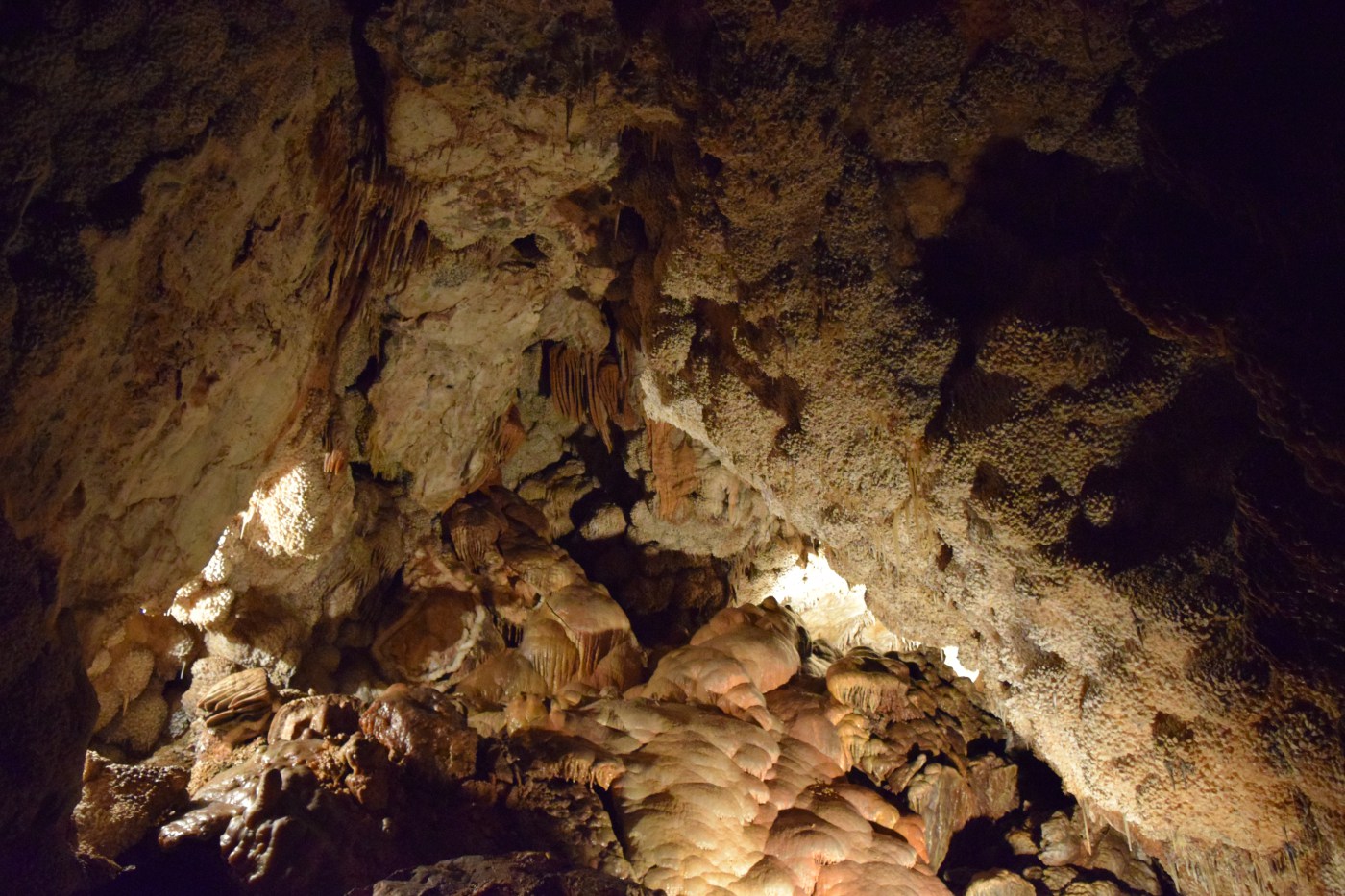
On our way out of South Dakota at the end of August, we explored two caves- Wind Cave National Park and Jewel Cave National Monument. Despite being only about a 40 minute drive apart, these caves are drastically different from each other.
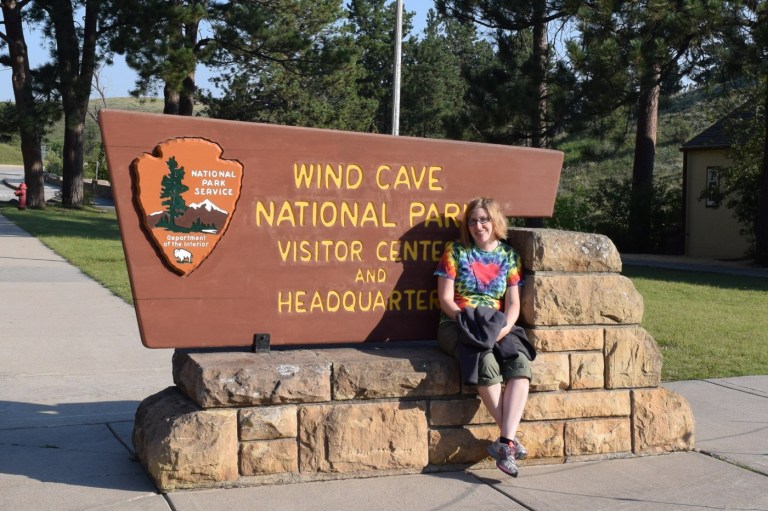
 From above, Wind Cave National Park is a 1.1 mile by 1.3 mile rectangle. But inside the cave itself, 143 miles of tunnels have been explored. The exploration began in the late 1800s, after JD McDonald was hired by the South Dakota Mining Company to mine the site. While the mining claim was unsuccessful, JD’s son Alvin began exploring the cave by candlelight. (I have to stop right here to marvel at this… Alvin explored by candlelight. We are so used to having bright LED flashlights and lamps these days – can you imagine what it would be like to wind your way through a windy cave with the dim and fragile light of a candle? There is a point in the tour where the guide turns all of the cave’s uplighting off and lights a candle; it is dark and spooky and you cannot see very far in front of you! In my mind, Alvin was a brave soul.). Alvin was also scientific in his approach – he kept a detailed journal and map of the routes explored within the cave; today’s map builds upon exploration that started over 100 years ago! Eventually the McDonalds and a few others realized that the cave would be profitable – not by mining as originally anticipated but instead through tourism – and so began the guided tours of the cave. Wind Cave was established as a National Park in 1903 to preserve and protect this wondrous underground space.
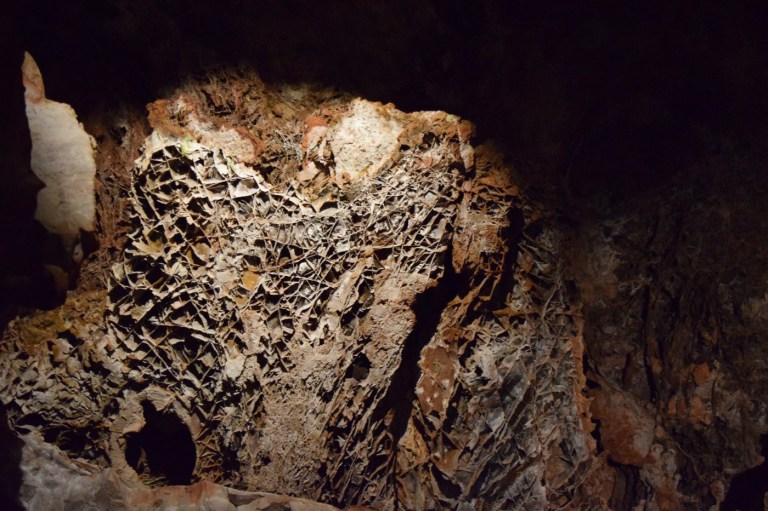
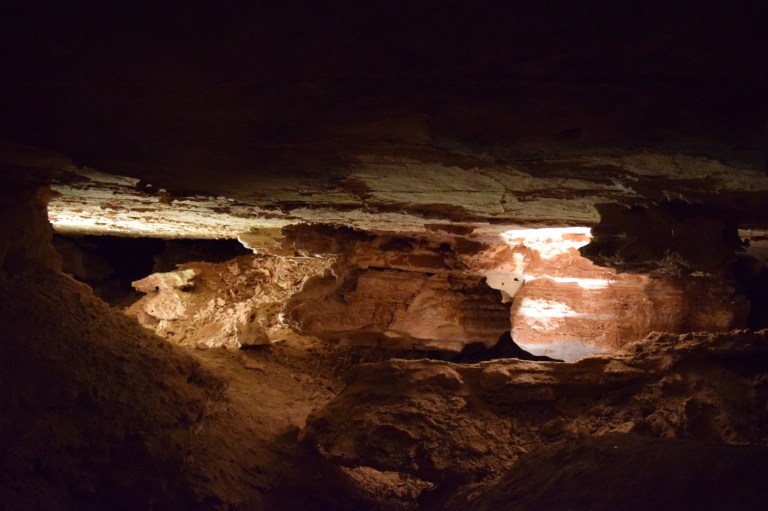
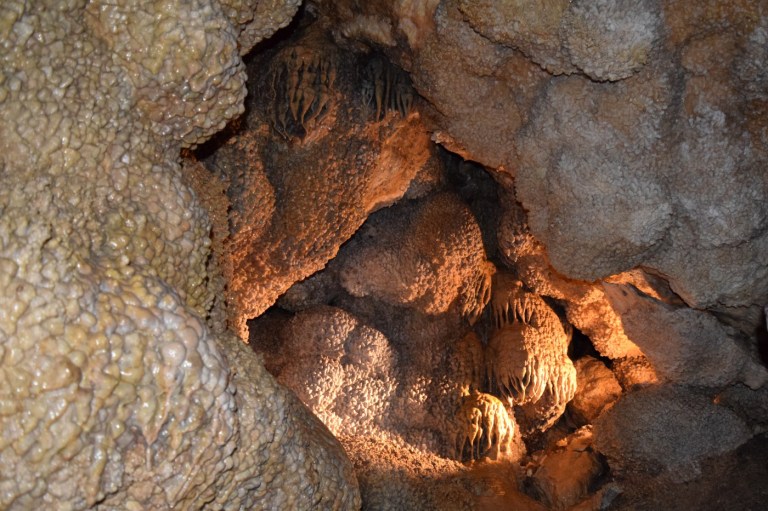
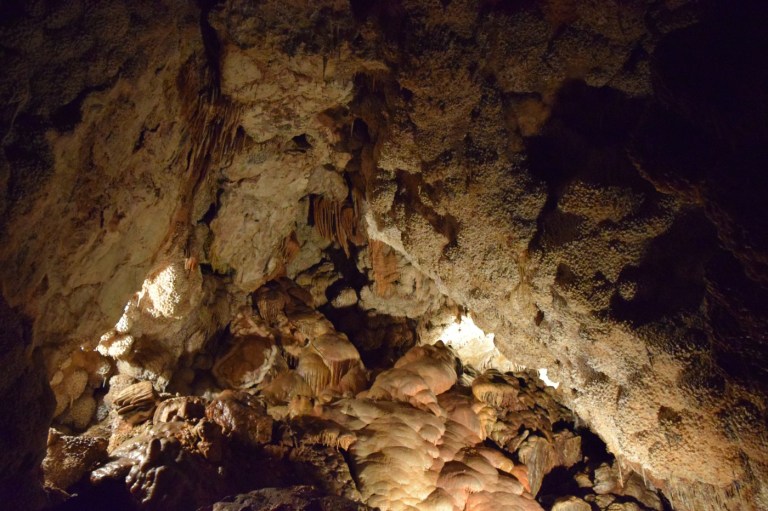
The area above Wind Cave is a lush prairie, and it is hard to prepare for the wonders just below the surface. The inside of Wind Cave is somewhat magical- it is cool and dark, and when you enter you hear the air whirring through the passages. The park service has installed lights along some of the passageways, and I couldn’t help but daydream while peering into the hallways, wondering where they went – was this a passage that lead to a dead end, or did it descend into a lower layer of Wind Cave, traveling along for miles? The guide lured me back to the present, pointing out some of the distinguishing features of Wind Cave. In particular, this cave is famous for what is called boxwork – fragile pieces of calcite formed into a honeycomb shape, hanging along the walls and ceiling of the cave. Most of my pictures in the low light did not come out very well (still learning how to use the dslr), but here are a few…

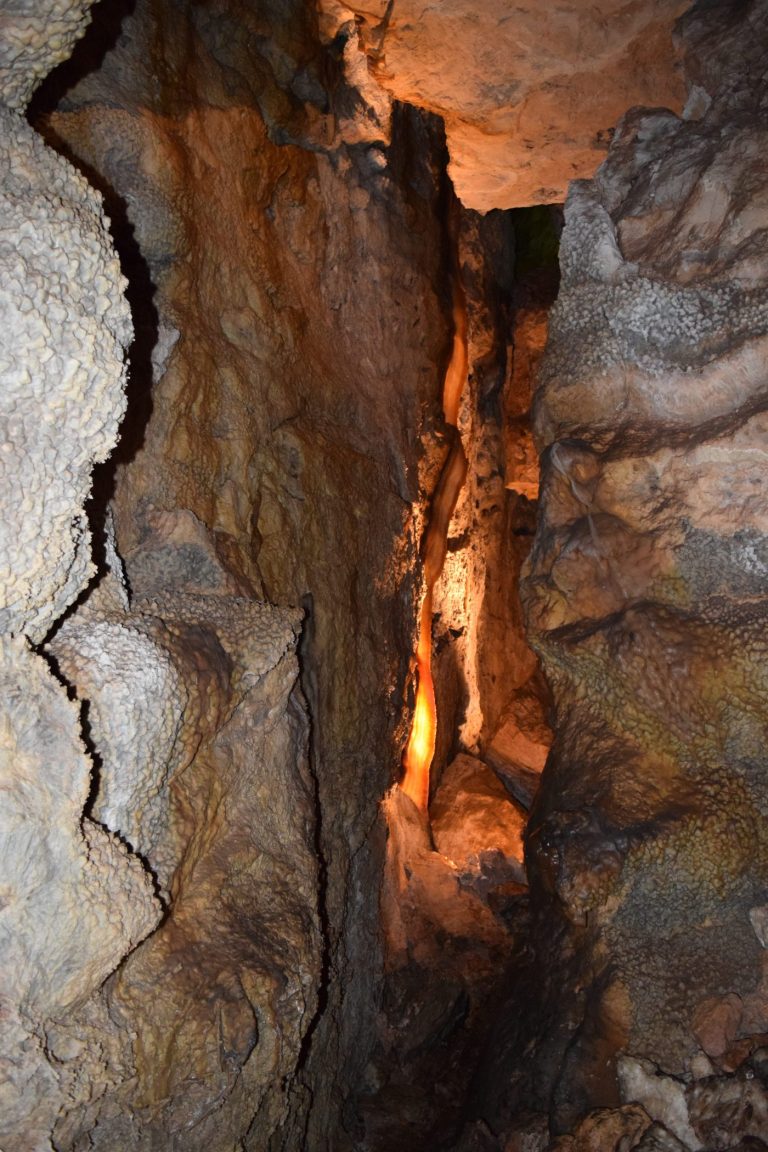
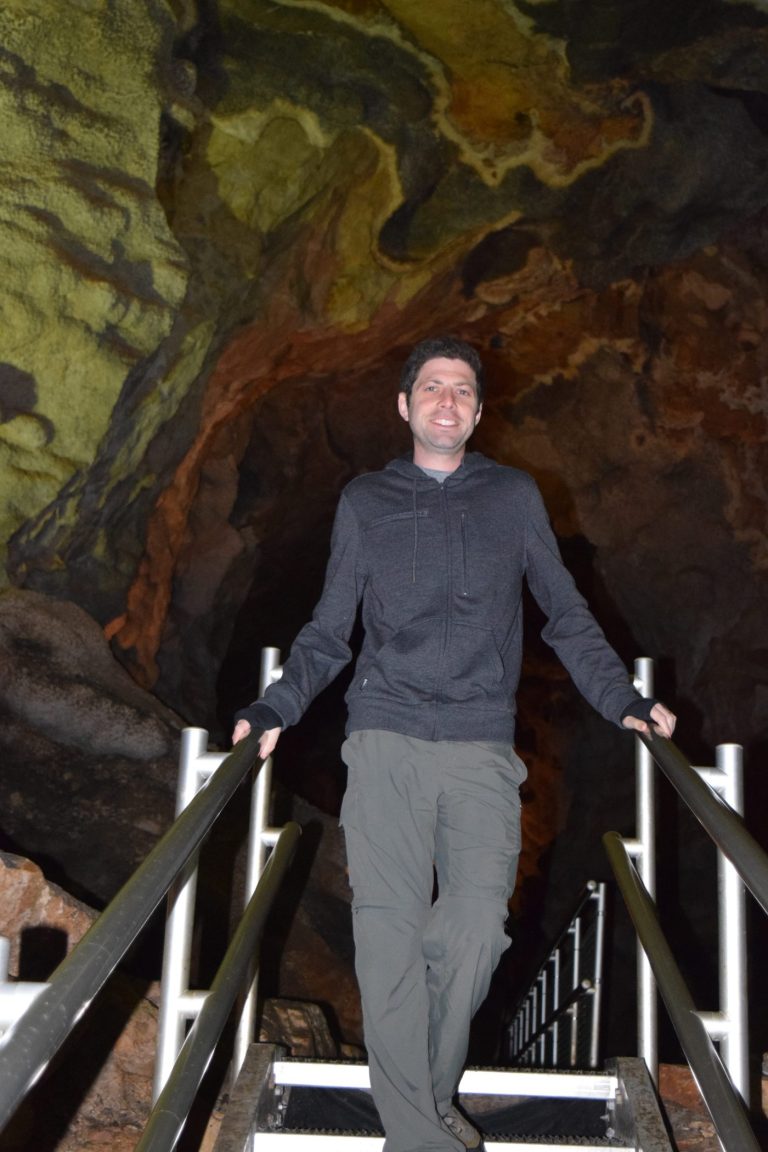
Jewel Cave National Monument, similar to Wind Cave National Park, was also a tourist attraction prior to its designation as a national monument in 1908. Currently over 181 miles of Wind Cave have been explored, making it the third longest cave in the world! We took the “Scenic Tour” of Wind Cave, a half mile loop (a small taste of the cave!) packed with calcite crystals that sparkle like jewels (hence the name of the monument). As we traveled through the cave, the guide pointed out the various mineral formations; I found this quite amusing, as the formations don’t have very technical names but instead have descriptions that seem to reflect the object or food for which the mineral most closely resembles. Jewel Cave is known for its nailhead spar and dogtooth spar (the nailhead are more round while the dogtooth are pointy); there is also cave popcorn (aptly named for the formation’s popcorn-looking appearance) and draperies (whose appearance mimic drapes!). Near the end of the tour is a large drapery that looks like a giant strip of bacon! Jewel Cave also has stalactites and stalagmites (the only formations I know of that have more technical-sounding names!); these are mineral formations that look like icicles – stalactites hang from the ceiling of the cave whereas stalagmites rise from the floor. Some pictures from our tour are below, although they capture only a fraction of the wondrous formations in the cave.


 And finally, because I know you have been wondering since I started this post – why is one of these caves a national park whereas the other is a national monument? The designation largely is due to who makes the designation. Congress alone has the power to establish a national park whereas the Antiquities Act of 1906 gives the president the power to create national monuments. So there is your trivia for the day!
 out of our element
Wind caves look cool. I want to go one day. Thanks for the info.
LikeLike